EU 2: You will be voting against migrants whichever way you vote
How to vote in the referendum if you support a humane response to the current migration crisis? Many in the No camp sound like they just want to “secure our borders” and keep the migrants out. But if we want a humane response what do we do?
In 2014, when rickety boats filled with people fleeing war and persecution began to sink, dragging their passengers to the bottom of the Mediterranean, or their bodies got washed up on the nearest shore, there were some who shouted, “Close the borders”. The Tory-led coalition (really the Tories dragging the pathetic so-called Liberal Democrats behind them) said, in effect, “Let them drown” and withdrew its support for the Italian-led rescue operations. Under pressure after this common Tory gut reaction Cameron said they would take in a tiny number of refugees – but not from the Mediterranean. They would take them from the refugee camps in Lebanon and elsewhere. Because, you see, people contemplating a journey across the Mediterranean had to learn a lesson: “Don’t set out in the first place.” So when, predictably, the drowning continued, presumably the Tories thought, “Don’t come whining to us – it’s your own fault.” By April 2015 there were fifteen times more deaths of migrants in the Mediterranean that year than in the whole of 2014.
More recently, during the crisis in Calais, in the camp called “the Jungle”, Cameron seems to have been forced (through actual or threatened legal action in the courts) to concede that at least some children there, with family in the UK, have the right to come here. But he’s done bugger all about it and most of them are still in Calais.
It’s arguable that if we vote to leave the EU we will be turning our backs on desperate people and putting their fate in the hands of a politician (whether Cameron or Boris Johnson) who would let migrants drown, let them rot in the garbage of Calais or send them packing back to where they came from.
So what would we be doing if we voted to stay in the EU? Other EU states seemed at first to be different. Germany took large numbers of refugees and there was talk of sharing responsibility across the EU states. But many were reluctant from the start, they couldn’t agree how this might be done and they began to squabble amongst themselves. So there was deadlock and some of them began to close their borders – those borders which, under the Schengen Convention, were the pride and joy of the EU, open borders within the Union. Another cry went up: “Schengen is finished.”
For those who don’t like the EU because they don’t like foreigners this is good news. For them the EU is finished, and good riddance. For those who hoped that the EU would provide a humanitarian solution it is bad news. So how to vote? Jeremy Corbyn is still optimistic as, on behalf of the Labour Party, he argues to vote Yes to the EU:
“‘There has to be an agreement all across Europe that [the EU states] all take a proportion of [the refugees],’ he said. ‘The problem is that the degree of inward-looking politics that’s going on has meant that Greece is making a huge effort, Italy is making a huge effort and Germany is making a huge effort. Every other country is putting barbed wire entanglements along their borders to keep desperate people out … Surely in the 21st century the least we can do is reach out and try to help these people in some way; by the political solution in Syria; by the support for what the Greek government is trying to do and take a proportion all across Europe.’”[1]
That, presumably, would be the policy if there was a Labour government. But yesterday the French began to bulldoze the people in Calais out of their makeshift homes. The French had originally said that the process of moving people would be done by gentle persuasion over many weeks, not with force or violence, not with bulldozers. The French Minister of the Interior spelt this out only last week: the government’s plan, he said, was not “to carry out a brutal evacuation of the camp by using bulldozers, this is not how we operate.” But yesterday the bulldozers appeared and the destruction began.
On Channel 4 News last night Krishnan Guru-Murthy asked Sylvie Bermann, the French ambassador to the UK: “Why did you say ‘no bulldozers’ and then use them?”
Bermann: I think we are using bulldozers to clear the camp, not to force all these migrants to go.
Guru-Murthy: But you said you wouldn’t.
Bermann: Well, our ministers said we wouldn’t force people to go, but at the same time what I cannot understand is – well, your reporter said it was filthy, stinking conditions. So how could you consider it better to live in these squalid conditions than to be relocated in accommodations [sic] where you have water, heating, electricity?
Guru-Murthy: But you don’t have enough space. There are thousands living there and there aren’t enough spaces in the shipping containers. They’re not flats, are they, they’re shipping containers, where you’re suggesting they go and live in?
Bermann: They are temporary accommodations, that’s true, but some of them will be relocated in other camps in France.
Guru-Murthy: Can you guarantee every one of them a comfortable roof over their heads?
Bermann: They will be relocated, but conditions will be far much better [sic] than it was in the Jungle.[2]
At the end of all this ducking and diving, there was no answer to the question, “Why use bulldozers when you said ‘no bulldozers’?” But then Sylvie is a diplomat.
So referendum voters who want a humanitarian solution to the migration crisis aren’t going to get one, in or out of the EU. The Tories will close the UK’s borders either way; the EU states will do the same; and France, our nearest neighbour, will bring out the bulldozers at the drop of a hat despite its much-vaunted pride in being the home of human rights.
How to vote? With some difficulty.
[1] The Guardian, 29 February 2016.
[2] Channel 4 News, 29 February 2016.
EU 1: Thinking aloud about some of the questions: workers’ rights
I haven’t decided how I’m going to vote in the EU referendum. If I vote to leave I will be joining a ramshackle bunch of characters including Michael Gove, Nigel Farage and George Galloway. Shouting with them from the sidelines, as Andrew Raunsley points out in today’s Observer (see link (1) below), are Marine le Pen and Vladimir Putin. And if the No camp wins we might even end up with Boris Johnson as prime minister.
All that is nearly enough to send me into the Yes camp!
But I’m also horrified by the supporters of continued membership who, one way or another, have got us where we are today. Raunsley’s list includes
“the chancellor, foreign secretary and home secretary, most of the rest of the cabinet, the great majority of senior figures from the opposition parties, the bulk of big business and the trade unions, the governor of the Bank of England, the president of the United States and the leader of every European country that anyone might conceivably have heard of.”
That’s almost enough to send me into the No camp!
However, it’s not about lists of clowns, bankers, politicians, or other Very Important People. It is, as Tony Benn always insisted, about “the issues”. Take, for instance, the question of workers’ rights. Would it be better for workers’ rights if we stayed in or if we left?
Let me suggest one argument for staying in. Many unions are saying that workers’ rights will be better protected if we stay in. But I notice the biggest French union, the CGT, says that the latest “reforms” of the Code du Travail announced by the French government will take France back to the 19th century (see link (2) below). And this in a France firmly entrenched in the EU. This game of “reforms” is the game all governments want to play, and no country’s workers are safe, and this suggests that there are no automatic guarantees of workers’ rights in the EU and that whether we’re in or out we’ll have to defend the rights we fought for. M. Martinez is calling on French trade unionists to do that now in France. So the argument for staying in to protect workers’ rights doesn’t seem to be a particularly strong one.
Unless, of course, we add M. Martinez’s element of workers taking action to defend their rights. Then, if we stayed in, it would be easier to join them and any others across the EU doing the same. Wouldn’t Brexit leave British workers weaker against Cameron, and other workers in Europe weaker against their own governments? I think solidarity is better than isolation. And perhaps solidarity across the EU could change it to the advantage of workers beyond the wildest dreams that Cameron has of changing it to the advantage of his rich, arrogant, corporate buddies.
That’s my first thought, anyway. More to come as the campaigning goes on.
(1) Andrew Raunsley’s article: http://www.theguardian.com/commentisfree/2016/feb/21/eu-refendum-tory-party-uk-at-stake
(2) Article in Libération: http://www.liberation.fr/france/2016/02/19/martinez-le-nouveau-code-du-travail-un-retour-au-xixe-siecle_1434633
On responsibility
David Cameron clearly can’t break the habit of a lifetime: he’s going to play the race card again. He seems to have set in motion a nice little scare story. An agreement made some years ago between the UK and France allows UK border control officials to police the borders between France and the UK on the French side in order to stop asylum seekers from ever arriving on British soil. This is a local version of the wider system of Airport Liaison Officers (ALOs) who since the 1990s have been sent to a number of what are called “refugee-producing countries” – that is, persecuting countries – in order to help them stop their terrified citizens from fleeing their borders and applying for asylum here.
Now Cameron is suggesting that if the EU referendum results in the UK leaving the EU France may renege on that agreement, resulting in uncontrolled migration to our shores and migrant camps on the beach at Dover instead of Calais. So the message is vote to stay in the EU and we’ll keep the barbarians out.
Well, I haven’t decided how I’m going to vote. But however I vote it won’t be based on some imagined need to keep refugees out. This refugee crisis, perhaps more than any other, is of our own making. “Jaw-jaw is better than war-war”, said Churchill (of all people!). But the US chose war in Afghanistan as revenge for the Twin Towers and to get rid of the Taliban and al-Quaida. It failed and, with our help, left the country in a mess with the Taliban still alive and kicking today; we chose war in Iraq to get rid of weapons of mass destruction which we knew it didn’t have, left it hopelessly divided and paved the way for the rise of ISIS. We intervened in Libya to save it from Gaddafi and, yes, you’ve guessed it, left it in a mess – arguably, as in the case of Iraq, in a worse mess than it was in under the regime we were so eager to get rid of. Now we’ve agreed to join the airstrikes in Syria, and there’s talk of further military action in Libya (its “peace talks”, like those on Syria, having broken down). All of these interventions have produced innocent victims and, despite claims of “smart bombs” (not again, please), there will be more innocent victims. All these interventions have produced refugees and will continue to do so.
So I’m for the UK taking responsibility for the refugees it has helped to create, in line with its obligations under the Refugee Convention which it has signed. I’m for peace talks, diplomacy, all sorts of jaw-jaw. Whether we are in the EU or out, I’m against Airport Liaison Officers or anybody else preventing people fleeing unmentionable horrors from finding shelter here. And if the EU states are incapable of finding ways to share responsibility for refugees among themselves, perhaps the club is not worth belonging to after all.
I don’t like ending on what feels like a negative note, but it’s all I can manage tonight. Here’s the Cameron story:
http://www.bbc.co.uk/news/uk-politics-eu-referendum-35519210
New politics v. Old?
The Guardian reports Jeremy Corbyn’s interview with Andrew Marr. It seems like good news and a welcome breath of the new politics:
“Jeremy Corbyn says he would repeal Thatcher’s sympathy strikes ban
Labour leader says walkouts in support of workers from another industry are legal in most countries and should be so in UK”
And it is a welcome breath of the new politics, of course. But isn’t it typical that someone should immediately use a method based on the old politics to undermine the new and spoil our dinners? According to the report Len McCluskey, the Unite union’s General Secretary, quickly waded in to insist that Jeremy didn’t mean anything of the kind (how old politics that is). He claimed that when Corbyn said he would repeal Thatcher’s laws against solidarity action it didn’t mean “tube drivers going out in support of other workers.” Oh, yes it did, Len: according to the Guardian,
“On whether that meant he would repeal the legislation imposing bans on these [solidarity] measures, [Corbyn] said, ‘Of course.'”
I’m not sure what part of the phrase “Of course” Len doesn’t understand. But to me it means that Jeremy “would repeal the legislation imposing bans” on solidarity action.
Well, thank Gawd for that! And if solidarity action was legal now, not only tube drivers but other workers too could strike in support of, say, the junior doctors. Now that would get them their contracts, and protect patients, doctors and the future of the NHS.
So what would be wrong with that, Len?
Doctors on strike
When I got to the hospital at 1pm today there was no sign of a picket outside. Where were the striking junior doctors? Inside? I walked in and there was just the usual queue for the lifts. There are 12 floors at Hull Royal Infirmary – try to climb the stairs and you could end up being a patient! Anyway, no junior doctors’ picket.
Back outside, I spotted the office of the union Unison. The woman inside told me the strikers had gone to march around the centre of town, so I set out to find them. Halfway there I met about a dozen strikers, mostly in uniform, placards in hand, on their way back to the hospital, all set to stay on the picket line till 5pm. In town they’d handed out leaflets and explained their case for striking, and now, on their way back, they were greeted by a continual stream of car drivers hooting their support.
Why were they striking? They’ve been trying to negotiate a decent contract, they explain in their leaflet, that
“pays us fairly for the hours we work
ensures that the hours we work are safe
provides cover at weekends and at night, but also recognises our right to family life
doesn’t disadvantage those doctors who work less than full time or who take parental leave”
Now the government is threatening to impose a contract on them which doesn’t satisfy these points. The strike is “a last resort”, they explain. One of the doctors holding a placard and a handful of leaflets told me, “Quite honestly, I’d rather be working, but what else can we do?”
His words illustrate two things. First, their action today was not aimed at patients and did not put patients at risk, though that allegation has been made and will be made again. They are medics because they want to care for their patients. Secondly, his words are a measure of their desperation. Their leaflet explains:
“We are fed up of hearing government ministers undervalue our work and undermine patients’ trust in us. Many of us are already at breaking point, looking to work overseas or even leaving the medical profession altogether.”
“So when’s the next strike?” I asked my new doctor friend.
“Oh, not till next week,” he said. “But we’re hoping it won’t be necessary. We’re hoping the government will see sense and come back to negotiate.”
I must say the idea of the government seeing sense is not one that has often occurred to me. I suspect his hope is a vain one. There’ll be need for more strikes, and support from other workers, not just those in the medical professions, before the doctors get their contract.
Anyway, next week I’ll try to be on time and join the picket. Is that still called “secondary picketing”? And is that still illegal?
Don’t know.
Don’t care.
The wrong kind of Boxing Day
The rail network is mostly shut down for Boxing Day. “Most operators will be running no services on Boxing Day, with the rest running a reduced service”, says The Guardian, and Labour has pointed out the hypocrisy of the Tories on the subject (see the link below).
Well done, Labour, for making the most of this! And it is a serious issue. But I confess to having laughed a lot at some of the quotes here from Network Rail and the government: Mark Carne “acutely conscious” that passengers want to travel to see their families at Christmas. OK then, Mark, er, so, er — hello? Hello? Then there’s the rail minister saying she hoped that “any impacts to services are communicated to passengers”. What? While they’re stuck on a train stalled outside some closed station and reduced to breaking into their Christmas whisky for comfort?
But perhaps there’s good news on the horizon. Labour noticing this situation may mean that its old guard – the Blairites, the Brownites and the Gawd knows what-ites – have woken up to the need to attack the Tories, not their own leader. If so, and if Labour wins the next election, we will see the rail network publicly owned again and, this time (if I’ve read Jeremy right), publicly accountable. Now there’s a thought for comfort while you’re stuck on that train. Hands off my whisky!
Here’s the Guardian story:
John McDonnell at The Peoples Assembly Against Austerity
Shadow Chancellor John McDonnell talks about the new politics after Jeremy Corbyn’s election as leader of the Labour Party.

Targets should be to tackle homelessness, food banks, joblessness, withdrawal of social care, climate change not GDP which just measures how much wealth has moved to the top.
John McDonnell MP Shadow Chancellor The Peoples Assembly Against Austerity 05 12 15
“It’s not our war”
When a country goes to war, governments always back up their decision with high-flown rhetoric about defending this or standing up for that. They did it at the start of the First World War in 1914. When the shipbuilding workers of Govan on Clydeside went on strike in, I think, 1915 they were told they were “disloyal”, “unpatriotic”. The workers’ union replied that it was not their war. In his book The First Day on the Somme, Martin Middlebrook didn’t mention such resistance during those years, not just because his focus was on one day in a particular battle during that war, but also because he believed that “[t]he entire country, and beyond it, the Empire, entered wholeheartedly into the conflict.”[1] He did, however, recognise that the reality behind the war was not high-flown at all. He wrote:
“Britain’s stated war aim was to secure the neutrality of Belgium, but in reality she wished to curb the power of Germany, whom she regarded as a growing rival to her trade, maritime and imperial interests.”[2]
So the crime of the workers of Govan was really their disloyalty, not to some idea of “the nation” or to “King and Country” (both of which are routinely dressed up as noble causes) but to something even more questionable as objects of loyalty: Britain’s “trade, maritime and imperial interests”.
In the Foreword to his novel about the First World War, A Farewell to Arms, Ernest Hemingway makes a similar point, but with some anger:
“The title of the book is A Farewell to Arms and except for three years there has been war of some kind almost ever since it has been written … I am sure that I am prejudiced, and I hope that I am very prejudiced. But it is the considered belief of the writer of this book that wars are fought by the finest people that there are, or just say people, although the closer you are to where they are fighting, the finer people you meet; but they are made, provoked and initiated by straight economic rivalries and by swine that stand to profit from them. I believe that all the people who stand to profit by a war and who help provoke it should be shot on the first day it starts by accredited representatives of the loyal citizens of their country who will fight it.”
Moving on to the 21st century, it seems that the crime of those of us who support Stop the War is similar to that of the workers of Govan in 1915. So let’s keep saying, with them, “It’s not our war.”
[1] Middlebrook, M. (1984). The First Day on the Somme: 1 July 1916, Penguin Books, London, p. xv.
[2] Ibid.
Benediction in the Commons
Excellent. This cuts through Benn’s hypocrisy and blustering rhetoric

As First Lady, Hillary Rodham Clinton ‘urged’ her husband to bomb Serbia. As the Democratic Senator from New York, she voted for and vocally supported the invasions of Iraq and Afghanistan. As Secretary of State, she zealously oversaw the bombardment and destruction of Libya. Mrs Clinton’s lucrative and long-standing connections to so-called ‘defence contractors’ are no longer a secret, and, true to form, she is now calling for a ground war in Syria. In spite of all this and more, her impending presidency is sending liberals everywhere into fits of glossolalist rapture.
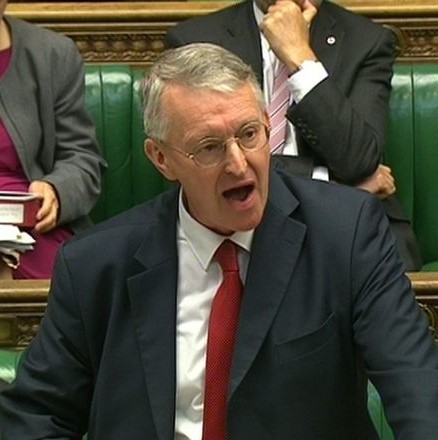
Last Wednesday, we in Britain were reminded that we have a hawkish Hilary of our very own. Towards the end of a parliamentary debate on bombing Syria, the shadow foreign secretary delivered a theatric speech in which he euphemistically enjoined the House of Commons to ‘do [its] bit’ in a land which is already being ravaged by the…
View original post 1,639 more words
Tell your MP: “all necessary measures” – against war
The Labour Party decided at its conference this year that military intervention in Syria by the UK should not take place without
- authorisation from the United Nations;
- a comprehensive plan for humanitarian assistance for any refugees who may be displaced by the action;
- assurances that the bombing is directed exclusively at military targets associated with ISIS;
- the subordination of any military action to international diplomatic efforts to end the war in Syria.
I’m not sure if the UN Security Council’s post-Paris call to take “all necessary measures” against ISIS counts as authorisation, although I think David Cameron thinks it does. It looks like he will present proposals for bombing to the House of Commons this week or next and he’s been telling the French president not to worry: it’ll be “shoulder to shoulder” again apparently.
A good many Labour MPs are flexing their shoulders in anticipation of voting with the Tories and against the Labour conference decision and the advice of Jeremy Corbyn, John McDonnell and others. They’re jumping the gun, of course, if you’ll pardon the expression. Even assuming that the Security Council’s “all necessary measures” count as authorisation, there are three other Labour Party conference criteria to be met before Labour MPs should even consider hoisting their shoulders into war. The Guardian thought that meeting all four criteria would be difficult if not impossible “in the short term”. Or in the long term, I would add. Even if, by sleight of hand or smoke and mirrors, Hilary Benn, say, declared they had been met, those vague criteria couldn’t possibly guarantee that refugees would be protected, that only military targets associated with ISIS would be bombed, or that international diplomatic efforts would be able to end the war in Syria while the politicians “pitilessly” (the word used by the French president) extend it.
Politicians quite like shoulder-flexing. But we must absolutely refuse to give them permission. Although John McDonnell has suggested that Labour MPs might have a free vote, I’ve told my MP (Alan Johnson) to vote against war. Please tell yours. And sign a petition, pass a resolution in your union branch, or at your local Labour Party meeting, and go on a demo.
Because the truth is that the history of previous shoulder-to-shoulder events (Afghanistan, Iraq, Libya, then back to Iraq again) cries out for them not to do it again. It doesn’t work. It won’t work with French shoulders either. What it will do (to use a phrase that was quite often used by my mother) is send us all to buggery.
In today’s Guardian, Frankie Boyle argues that “Britain clings to its bombing addiction with the weary rationale of a junkie.” He concludes:
“If we wanted to get well as a society, we would end up like anyone in recovery: sitting around a table talking, having awkward conversations and making compromises. Instead, a few months from now, we’ll be dealing with the kind of horror that is unleashed when British MPs are told they can vote with their consciences.”
Jeremy and John, I don’t know how you’re going to play this but, given the malleability of many Labour MPs’ consciences in the past, I don’t feel safe with a free vote.
 Bob Mouncer's blog